Showing posts with label one stop celebration. Show all posts

Saturday, 22 January 2011

A Saturday Celebration: Lord Byron

A Saturday Celebration:
Lord Byron, 1788 - 1824

Today at One Stop Poetry we celebrate the work of one of Britain's most famous poets, George Gordon Byron. He is  6th Baron Byron, born, 22nd January 1788, better known as Lord Byron.

Byron’s short life of 36 years was full of adventure and literary acclaim. From being revered as a national hero in Greece, for taking arms and fighting the Ottoman Empire in the Greek War of Independence, to the famous tale of being cooped up for three days during a “wet, ungenial summer” at the Villa Diodati, which  led to Mary Shelley’s famous novel, Frankenstein.

Byron shared the benefits and pitfalls of celebrity.  Affairs and scandals were to follow him throughout his life, including those of sodomy and incest. These things coupled with bouts of depression, extravagant, flamboyant and eccentric behaviour, an extreme temper, a club foot which caused a limp to blight him all his life, Byron certainly had many sources of inspiration.

Following a violent fever, he died, on 19th April 1824, whilst in Greece fighting for their independence. Such was Byron's standing that having been embalmed, the Greeks wanted to keep part of him with them. It is rumoured that either his heart or lungs remain in Greece. Byron's body was returned to England for burial at Westminster Abbey. However, due to "unquestionable morality" the Abbey refused the burial. He is buried at the Church of St Mary Magdalene, in Hucknall, Nottingham. 

He left behind a daughter, The Honorable Augusta Ada Byron, born 1815, who herself holds a notable place in history. It was she, who worked closely with Charles Babbage, the man who was widely regarded as the inventor of the modern computer, and is known for  being the world's first computer programmer.

As a leading figure in the Romanticism movement, Byron was a prolific writer, and it is his work that we wish to share and celebrate today. There have been so many poems to chose; I am sure you each have your favorites. Today I will leave you with three poems, starting with, perhaps, his most known, She Walks in Beauty

She Walks In Beauty
by Lord Byron (1814)

She walks in beauty, like the night
Of cloudless climes and starry skies;
And all that's best of dark and bright
Meet in her aspect and her eyes:
Thus mellowed to that tender light
Which heaven to gaudy day denies.

One shade the more, one ray the less,
Had half impaired the nameless grace
Which waves in every raven tress,
Or softly lightens o'er her face;
Where thoughts serenely sweet express
How pure, how dear their dwelling place.

And on that cheek, and o'er that brow,
So soft, so calm, yet eloquent,
The smiles that win, the tints that glow,
But tell of days in goodness spent,
A mind at peace with all below,
A heart whose love is innocent!

When We Two Parted
by Lord Byron (1817)

When we two parted
In silence and tears,

Half broken-hearted,
To sever for years,
Pale grew thy cheek and cold,
Colder thy kiss;
Truly that hour foretold
Sorrow to this.

The dew of the morning
Sank chill on my brow— 
It felt like the warning
Of what I feel now.
Thy vows are all broken,
And light is thy fame:
I hear thy name spoken,
And share in its shame.

They name thee before me,
A knell to mine ear;
A shudder comes o'er me— 
Why wert thou so dear?
They know not I knew thee,
Who knew thee too well:— 
Long, long shall I rue thee
Too deeply to tell.

In secret we met— 
In silence I grieve
That thy heart could forget,
Thy spirit deceive.
If I should meet thee
After long years,
How should I greet thee?— 
With silence and tears.

Epitaph to a Dog
By Lord Byron (1808)

Near this Spot
are deposited the Remains of one
who possessed Beauty without Vanity,
Strength without Insolence,
Courage without Ferosity,
and all the virtues of Man without his Vices.

This praise, which would be unmeaning Flattery
if inscribed over human Ashes,
is but a just tribute to the Memory of
BOATSWAIN, a DOG,
who was born in Newfoundland May 1803
and died at Newstead Nov. 18, 1808.

When some proud Son of Man returns to Earth,
Unknown by Glory, but upheld by Birth,
The sculptor’s art exhausts the pomp of woe,
And storied urns record who rests below.
When all is done, upon the Tomb is seen,
Not what he was, but what he should have been.
But the poor Dog, in life the firmest friend,
The first to welcome, foremost to defend,
Whose honest heart is still his Master’s own,
Who labours, fights, lives, breathes for him alone,
Unhonoured falls, unnoticed all his worth,
Denied in heaven the Soul he held on earth –
While man, vain insect! hopes to be forgiven,
And claims himself a sole exclusive heaven.

Oh man! thou feeble tenant of an hour,
Debased by slavery, or corrupt by power –
Who knows thee well must quit thee with disgust,
Degraded mass of animated dust!
Thy love is lust, thy friendship all a cheat,
Thy tongue hypocrisy, thy words deceit!
By nature vile, ennobled but by name,
Each kindred brute might bid thee blush for shame.
Ye, who perchance behold this simple urn,
Pass on – it honors none you wish to mourn.
To mark a friend’s remains these stones arise;
I never knew but one – and here he lies. 


images all courtesy creative commons/wikipedia


Saturday, 15 January 2011

A Saturday Celebration: A A Milne

A Saturday Celebration  
A.A. Milne

This week One Stop Poetry is proud to celebrate poet & author, A.A.Milne, whose birthday is this coming week.

Alan Alexander Milne was born in Kilburn, London on the 18th of January 1882. His father ran a small public school, Henley House. During his time, attending Henley House, one of his teachers was the renowned author H. G. Wells; Wells held a teaching post there for a short while. After finishing at Henley House, Milne went on to attend Westminster School & Trinity College, Cambridgeshire where he studied for a maths scholarship.

Whilst attending Trinity College, Milne was editor and writer for the student magazine, Granta. This led him to write more and before long he was writing for Punch Magazine. He became assistant editor, joining their staff in 1906.

In 1913, Milne married Dorothy “Daphne” de Selincourt. Before they had time to settle down and enjoy their new life together, he had to join the armed forces and fight, as an officer, in WWI. He was discharged in 1919. Milne’s only son, Christopher Robin, was born in 1920.

Milne’s literary career was diverse to say the least. As a playwright, he wrote over 30 plays. The most famous being the adaptation of Wind in the Willows, Toad of Toad Hall. As cinema was taking off, during this time, he also wrote 4 screenplays which were filmed in 1920. Milne wrote 7 novels, the best known  was a detective story, The Red House Mystery, in 1922.

Milne reached  literary brilliance in  the four year period between1924 and 1928.

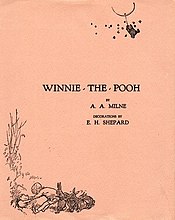
In 1924, he published his first collection of poems, When We Were Very Young, which was illustrated by friend and Punch cartoonist , E.H.Shepard. 
This was followed, in 1925, by a collection of short stories, published under the title Gallery of Children. It was these stories &amp poems that paved the way for the legendary, Winnie - the - Pooh, published in 1926. In 1927, Milne  published a series of nursery rhyme Now We Are Six. in 1928, the follow up, The House At Pooh Corner was published. The aforementioned, illustrated by E.H.Shepard. 


“"When you wake up in the morning, Pooh," said Piglet at last, "what's the first thing you say to yourself?"
"What's for breakfast?" said Pooh. "What do you say, Piglet?"
"I say, I wonder what's going to happen exciting today?" said Piglet. 
Pooh nodded thoughtfully.
"It's the same thing," he said.

The success of Winnie - the - Pooh was very much to Milne’s annoyance. Before he wrote it,  he loved the freedom of switching genre & style, and being able to write about whatever he pleased. After the publication of the Pooh books, this changed.  The audience for his more "grown up" work dwindled. 

Although he was still  wrote and published on a regular basis, he would never shake off the stigma of writing for children. His work, after this period, was never  received in quite the same manner.

In 1952, Milne retired after a stroke and the resulting brain surgery rendered him an invalid. He lived for another four years this way and on the  31st  of January 1956, aged 74,  he passed away.

On his death, the rights to Winnie - the - Pooh were sold to Walt Disney, where that legacy continues to this very day. Every year, another child is enchanted by the stories of the “hunny” loving bear that lives in "One Hundred Aker Wood".

Milne’s poetry has been celebrated , parodied, and even set to music, but the poem I would like to leave  you with  today is one of great literary importance, The Teddy Bear, published in 1924. This is the very first appearance of Winnie - the - Pooh featured in the poetry collection, When We Were Very Young.


Teddy Bear
by A. A. Milne

A bear, however hard he tries,
Grows tubby without exercise.
Our Teddy Bear is short and fat,
Which is not to be wondered at;
He gets what exercise he can
By falling off the ottoman,
But generally seems to lack
The energy to clamber back.

Now tubbiness is just the thing
Which gets a fellow wondering;
And Teddy worried lots about
The fact that he was rather stout.
He thought: "If only I were thin!
But how does anyone begin?"
He thought: "It really isn't fair
To grudge one exercise and air."

For many weeks he pressed in vain
His nose against the window-pane,
And envied those who walked about
Reducing their unwanted stout.
None of the people he could see
"Is quite" (he said) "as fat as me!"
Then, with a still more moving sigh,
"I mean" (he said) "as fat as I!

One night it happened that he took
A peep at an old picture-book,
Wherein he came across by chance
The picture of a King of France
(A stoutish man) and, down below,
These words: "King Louis So and So,
Nicknamed 'The Handsome!'" There he sat,
And (think of it!) the man was fat!

Our bear rejoiced like anything
To read about this famous King,
Nicknamed "The Handsome." There he sat,
And certainly the man was fat.
Nicknamed "The Handsome." Not a doubt
The man was definitely stout.
Why then, a bear (for all his tub)
Might yet be named "The Handsome Cub!"

"Might yet be named." Or did he mean
That years ago he "might have been"?
For now he felt a slight misgiving:
"Is Louis So and So still living?
Fashions in beauty have a way
Of altering from day to day.
Is 'Handsome Louis' with us yet?
Unfortunately I forget."

Next morning (nose to window-pane)
The doubt occurred to him again.
One question hammered in his head:
"Is he alive or is he dead?"
Thus, nose to pane, he pondered; but
The lattice window, loosely shut,
Swung open. With one startled "Oh!"
Our Teddy disappeared below.

There happened to be passing by
A plump man with a twinkling eye,
Who, seeing Teddy in the street,
Raised him politely to his feet,
And murmured kindly in his ear
Soft words of comfort and of cheer:
"Well, well!" "Allow me!" "Not at all."
"Tut-tut! A very nasty fall."

Our Teddy answered not a word;
It's doubtful if he even heard.
Our bear could only look and look:
The stout man in the picture-book!
That 'handsome' King - could this be he,
This man of adiposity?
"Impossible," he thought. "But still,
No harm in asking. Yes I will!"

"Are you," he said,"by any chance
His Majesty the King of France?"
The other answered, "I am that,"
Bowed stiffly, and removed his hat;
Then said, "Excuse me," with an air,
"But is it Mr Edward Bear?"
And Teddy, bending very low,
Replied politely, "Even so!"

They stood beneath the window there,
The King and Mr Edward Bear,
And, handsome, if a trifle fat,
Talked carelessly of this and that....
Then said His Majesty, "Well, well,
I must get on," and rang the bell.
"Your bear, I think," he smiled. "Good-day!"
And turned, and went upon his way.

A bear, however hard he tries,
Grows tubby without exercise.
Our Teddy Bear is short and fat,
Which is not to be wondered at.
But do you think it worries him
To know that he is far from slim?
No, just the other way about -
He's proud of being short and stout.


And before I go, our most famous of bears would like to leave a special message for all of you

"Poetry and Hums aren't things which you get, they're things which get you. And all you can do is to go where they can find you"


all images are under creative commons license

Saturday, 8 January 2011

A Saturday Celebration: Thomas Hardy


A Saturday Celebration:     Thomas Hardy


This Tuesday marks the death of one of Britain's most finest writers, today One Stop Poetry celebrates the work of poet & writer  Thomas Hardy, who died 11th January 1928.


Hardy is famous for writing so many classic fictional tales, Far from the Madding Crowd & Tess of the D'Urbevilles, to name just two, but he always preferred to be known as a poet, writing novels for financial gain only. As a poet his was prolific, having written over 800 poems before his death, and most having been published!


Thomas Hardy was born 2nd June 1840 in Higher Bockhampton, situated in the small parish of Stinsford, near Dorchester, Dorset. His father, also named Thomas, was a stonemason & builder.  Despite showing great academic potential, a college education was unaffordable, so at the age of 16 Thomas was to become an apprentice to a local architect in his village. Such was Hardy's promise at this that in 1862 he enrolled at King College, London, as a student of Architecture, winning many prizes from the Royal Institute of British Architects & the Architectural Association. Hardy was to spend 5 years in London before returning to Dorset following concerns over his health.


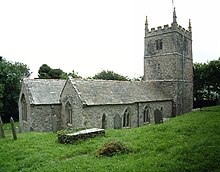
In 1870 Hardy was to travel to Cornwall and undertake work on the restoration of St Juliots Church. It is here that he was to meet and fall in love with Emma Lavinia Gifford, whom he married in 1874. As a side note, St Juliots is situated very near Tintagel, my favourite place in the World. It was on a walk one day from Boscastle, a neighbouring village, through Valency Valley, heading inland, when my wife and I were to take shade at a Church looking down across the valley. Whilst taking rest we became aware that this was St Juliots, the Church restored by Hardy himself!


Emma was the love of Hardy's life and all though they were to be separated, she remained the main focus of his work. On her death in 1912, Hardy would undertake a trip to Cornwall revisiting the places linked to their courtship, resulting in the collection of Poems 1912 - 13, which reflects on her passing.


Although Hardy was to marry his secretary in 1914, who was nearly 40 years his junior, his love for Emma never waned. Having contracted pleurisy in the December, Hardy was to die on 11th January, 1928. At the nations request he was to be buried in Poets Corner, Westminster Abbey, although his family and friends wished for him to be buried alongside Emma at the parish church in Stinsford where he was born. Eventually a compromise was agreed whereby his heart was buried with Emma and his ashes at Poets Corner. Alongside Hardy at Poets Corner lay other notable literary genius's such as Alfred Tennyson, Rudyard Kipling, Robert Browning & Geoffrey Chaucer to name but a few.


On Sunday 16th January there is to be a memorial service held at Westminster Abbey, with a reading of his poetry to mark the 83rd anniversary of his burial.


Hardy was admired by many, including D H Lawrence, Robert Graves, Virginia Wolf and more recently Philip Larkin. In 1910 he was to be bestowed with the Order of Merit, which recognised his services to Literature.


The list of work associated with Hardy is immense, as well as the poetry, plays and short stories, the following are all novels written by him;

  • Desperate Remedies (1871)
  • Under the Greenwood Tree (1872)
  • A Pair of Blue Eyes (1873)
  • Far From the Madding Crowd (1874)
  • The Hand of Ethelberta (1876)
  • The Return of the Native (1878)
  • The Trumpet Major (1880)
  • A Laodicean (1881)
  • Two on a Tower (1882)
  • The Mayor of Casterbridge (1886)
  • The Woodlanders (1887)
  • A Group of Noble Dames (1891)
  • Tess of the d'Urbervilles (1891)
  • Jude the Obscure (1895)
  • The Well-Beloved (1897)
Today, One Stop Poetry would like to bring you two poems by Thomas Hardy,

At Castle Boterel
by Thomas Hardy

As I drive to the junction of lane and highway, 
And the drizzle bedrenches the waggonette, 
I look behind at the fading byway, 
And see on its slope, now glistening wet, 
Distinctly yet

Myself and a girlish form benighted
In dry March weather. We climb the road
Beside a chaise. We had just alighted
To ease the sturdy pony's load
When he sighed and slowed.

What we did as we climbed, and what we talked of
Matters not much, nor to what it led, -
Something that life will not be balked of
Without rude reason till hope is dead, 
And feeling fled.

It filled but a minute. But was there ever
A time of such quality, since or before, 
In that hill's story? To one mind never, 
Though it has been climbed, foot-swift, foot-sore, 
By thousands more.

Primaeval rocks form the road's steep border, 
And much have they faced there, first and last, 
Of the transitory in Earth's long order; 
But what they record in colour and cast
Is - that we two passed.

And to me, though Time's unflinching rigour, 
In mindless rote, has ruled from sight
The substance now, one phantom figure
Remains on the slope, as when that night
Saw us alight.

I look and see it there, shrinking, shrinking, 
I look back at it amid the rain
For the very last time; for my sand is sinking, 
And I shall traverse old love's domain
Never again. 

*************************

The Darkling Thrush
by Thomas Hardy


I leant upon a coppice gate, 
When Frost was spectre-gray, 
And Winter's dregs made desolate 
The weakening eye of day. 
The tangled bine-stems scored the sky 
Like strings of broken lyres, 
And all mankind that haunted nigh 
Had sought their household fires. 

The land's sharp features seemed to me 
The Century's corpse outleant, 
Its crypt the cloudy canopy, 
The wind its death-lament. 
The ancient pulse of germ and birth 
Was shrunken hard and dry, 
And every spirit upon earth 
Seemed fervorless as I. 

At once a voice arose among 
The bleak twigs overhead, 
In a full-hearted evensong 
Of joy illimited. 
An aged thrush, frail, gaunt and small, 
With blast-beruffled plume, 
Had chosen thus to fling his soul 
Upon the growing gloom. 

So little cause for carolings 
Of such ecstatic sound 
Was written on terrestrial things 
Afar or nigh around, 
That I could think there trembled through 
His happy good-night air 
Some blessed Hope, whereof he knew, 
And I was unaware. 

*************************

Historical Notes

Thomas Hardy was born in 1840 and died in 1928, living to be almost 88 years of age. During his life time the word was to change greatly. 

To put the duration of his life into some perspective, the year that Hardy was born, 1840, also saw Queen Victoria marry Prince Albert and the introduction of the very first stamp, the penny black. In 1928, the year of his death, Andy Warhol was born, & Mickey Mouse appeared for the first time in the animated cartoon "Plane Crazy".


Saturday, 18 December 2010

A Saturday Celebration: Emily Bronte


A Saturday Celebration: Emily Bronte

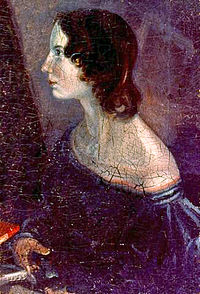
Tomorrow sees the anniversary of the death of one of Britain's most famous writers, Emily Bronte, author of the literary classic Wuthering Heights.

Emily Jane Bronte died on the 19th December 1848, aged just 30 years old.


Born in the village of Thornton, West Riding, Yorkshire, on 30th July 1818, Emily was the younger sister of Charlotte and the fifth of six children. In 1824 the family were to move to the village of Haworth where their father, Patrick Bronte was to take up residence as the perpetual vicar. It also gives me personal pleasure to be able to highlight one of the Bronte's today as the family are distant relations of mine, with their descendants marrying in to my grandmothers family who also herald from Haworth.

Emily was to only write one novel, Wuthering Heights, which was published in 1847, however before this she was to publish poetry, under the name Ellis Bell, which was published in 1846, under the title Poems by Curer, Ellis and Action Bell, a volume of work that also included the poetry of her sisters, Charlotte & Anne. It is her poetry that I wish to spotlight today.

At the age of 30 ill health was to take Emily, having caught a cold during the funeral of her brother. She was to die two months later, having refused "no poisoning doctor" near her. Her untimely death does leave you wondering, having written the all time classic Wuthering Heights, what other great classics would also have followed from her pen had death not taken her so soon?

One Stop Poetry Celebrates Emily Bronte;

The Old Stoic

RICHES I hold in light esteem
And Love I laugh to scorn;
And lust of fame was but a dream
That vanish'd with the morn:

And, if I pray, the only prayer
That moves my lips for me
Is, 'Leave the heart that now I bear,
And give me liberty!

Yea, as my swift days near their goal,
'Tis all that I implore:
In life and death a chainless soul,
With courage to endure.

*********

Self - Interrogation

THE evening passes fast away.
'Tis almost time to rest;
What thoughts has left the vanished day,
What feelings in thy breast?

"The vanished day? It leaves a sense
Of labour hardly done;
Of little gained with vast expense--
A sense of grief alone?

"Time stands before the door of Death,
Upbraiding bitterly
And Conscience, with exhaustless breath,
Pours black reproach on me:

"And though I've said that Conscience lies
And Time should Fate condemn;
Still, sad Repentance clouds my eyes,
And makes me yield to them!

"Then art thou glad to seek repose?
Art glad to leave the sea,
And anchor all thy weary woes
In calm Eternity?

"Nothing regrets to see thee go--
Not one voice sobs' farewell;'
And where thy heart has suffered so,
Canst thou desire to dwell?"

"Alas! the countless links are strong
That bind us to our clay;
The loving spirit lingers long,
And would not pass away!

"And rest is sweet, when laurelled fame
Will crown the soldier's crest;
But a brave heart, with a tarnished name,
Would rather fight than rest.

"Well, thou hast fought for many a year,
Hast fought thy whole life through,
Hast humbled Falsehood, trampled Fear;
What is there left to do?

"'Tis true, this arm has hotly striven,
Has dared what few would dare;
Much have I done, and freely given,
But little learnt to bear!

"Look on the grave where thou must sleep
Thy last, and strongest foe;
It is endurance not to weep,
If that repose seem woe.

"The long war closing in defeat--
Defeat serenely borne,--
Thy midnight rest may still be sweet,
And break in glorious morn!"